As a seller on Amazon, you must have learned one thing the hard way customers don't walk away from higher prices, they walk away from delivery charges. A small shift in how you present pricing can be the difference between an abandoned cart and a confirmed order.
Because customers don't just buy products. They buy feelings. And nothing triggers that feeling faster than two little words: FREE DELIVERY.
Now you aim to offer Free Delivery but without protecting your profit margins? That's not a strategy, that's a slow leak.
Let's talk about it like real sellers.
The Two Pricing Personalities
Every Amazon listing has a personality. And the two most common ones go head-to-head every single day.
✅ "Free Delivery" — aka The Smooth Talker
You price your product at ₹499 with FREE delivery.
Customer's reaction: "Nice. No extra charges. Clean deal. I'm in."
Why it works:
✔ There's no unpleasant surprise at checkout.
✔ Less mental effort = faster, more impulsive decisions.
✔ Feels like a complete, honest deal from the start.
❌ "Lower Price + Delivery Charges" — aka The Budget Hacker
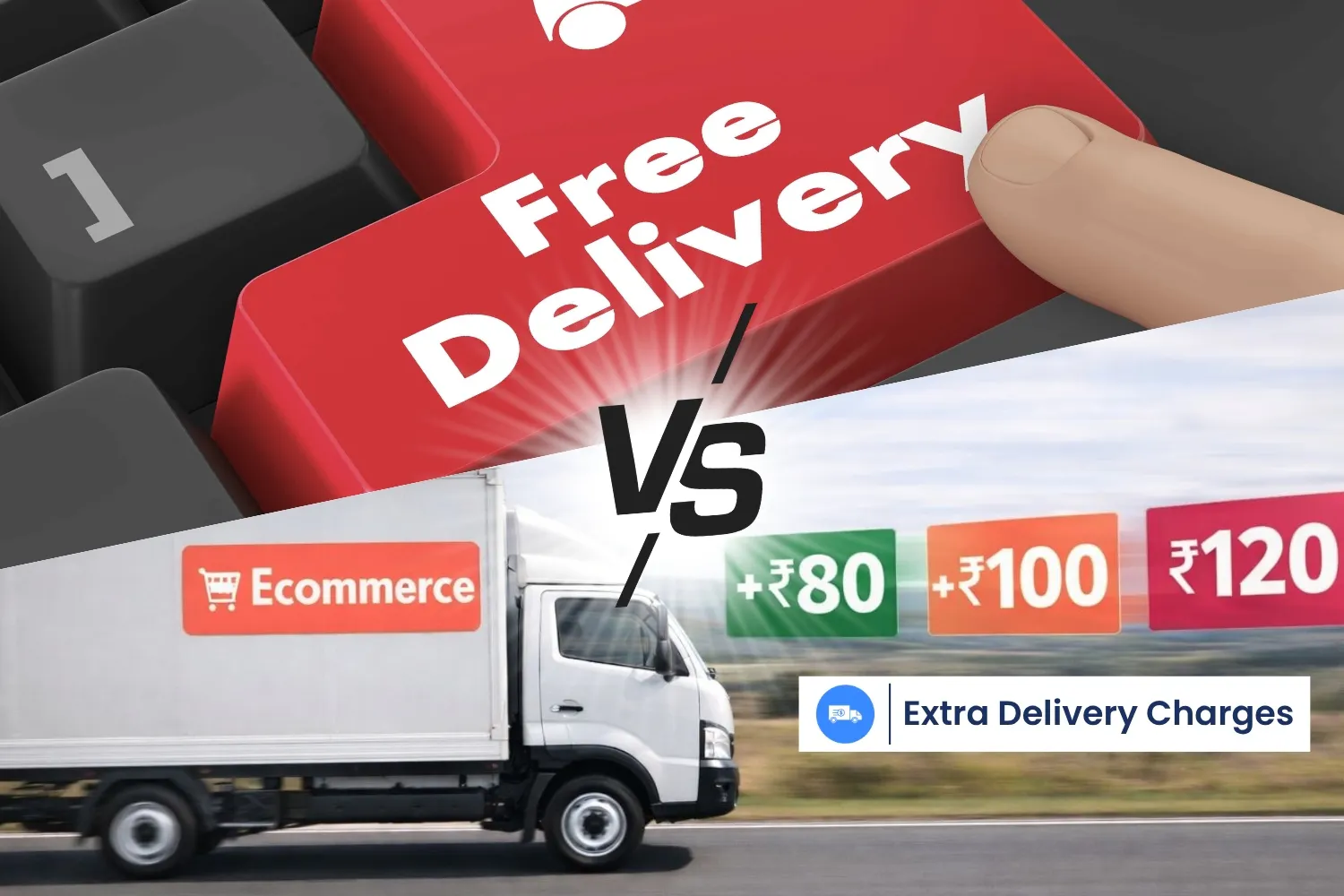
You price your product at ₹399 + ₹80 delivery.
Customer's reaction: "Wait… so the total is ₹479… okay, that's cheaper… but why is there an extra line?"
Why it backfires:
✘ Creates friction and second-guessing at checkout
✘ Customers feel tricked when the total doesn't match the listed price
✘ Even if it's cheaper overall, the experience feels messy and untrustworthy
The numbers might look similar on paper. But one of these listings feels like a gift, and the other feels like a puzzle the customer didn't ask to solve. And on Amazon, confusion always kills the sale.
The Real Mind-set — Three Types of Buyers on Amazon
Selling on Swiggy gives your restaurant business many advantages, such as:
Your customers are not one single person. On any given search page, you're dealing with three completely different human beings.
Type 1: The Prime Mind: Lives for convenience. Expects free and fast delivery, and any extra charge at checkout feels like a betrayal. Will choose free delivery every single time even if it costs a few rupees more.
Type 2: The Deal Hunter: Compares everything. Opens three tabs, calculates the total cost including delivery, and won't rest until they've found the lowest number. It's not emotion, it’s pure math.
Type 3: The Emotional Buyer: Sees "Free Delivery," clicks, and orders with no regrets. Won't lose sleep over a ₹20–30 difference. They just want the experience to feel smooth and clean.
And here's the thing: Type 3 is a massive segment. These are the buyers you win or lose in the first three seconds of them looking at your listing.
We've All Been That Person
You open Blinkit or Zepto to order one thing. Total comes to ₹49. Then you see it — "Add ₹51 more for free delivery."
Suddenly, you're adding biscuits, water, maybe some atta you didn't really need. Not because you planned to but because that free delivery bar turned into a challenge you couldn't ignore.
The same psychology plays out on Amazon every day. A customer sees "Free Delivery" and their brain quietly relaxes. The decision gets easier, the checkout feels cleaner, and the order gets placed.
Free delivery doesn't just attract buyers. It changes their behaviour entirely.
So, What Should Sellers Actually Do?
If you're building a brand, not just moving units, the answer leans clearly in one direction.
Go with the Free Delivery strategy. Even if your product price is slightly higher than others.
Here's why it pays off in the long run:
1. Better Conversion Rates: People hate last-minute surprise charges more than they hate a higher sticker price. A clean, all-in price removes the biggest obstacle between browsing and buying: checkout hesitation.
2. Your Brand Feels Premium: "Free Delivery" quietly signals: this seller is customer-first, professional, and trustworthy. And trust, in e-commerce, is the only currency that compounds over time.
3. Repeat Customers Actually Increase: Buyers remember the experience, not the exact rupee amount. "This seller never charged me any nonsense" is a powerful mental note that brings people back to your listing the next time they need something similar.
4. You Win the Buy Box More Often: Amazon's algorithm quietly rewards sellers with higher conversion rates and better customer experience. Free delivery feeds both. More Buy Box wins means more sales, which means better rankings. It compounds.
But Wait — When Should You Still Use Delivery Charges?
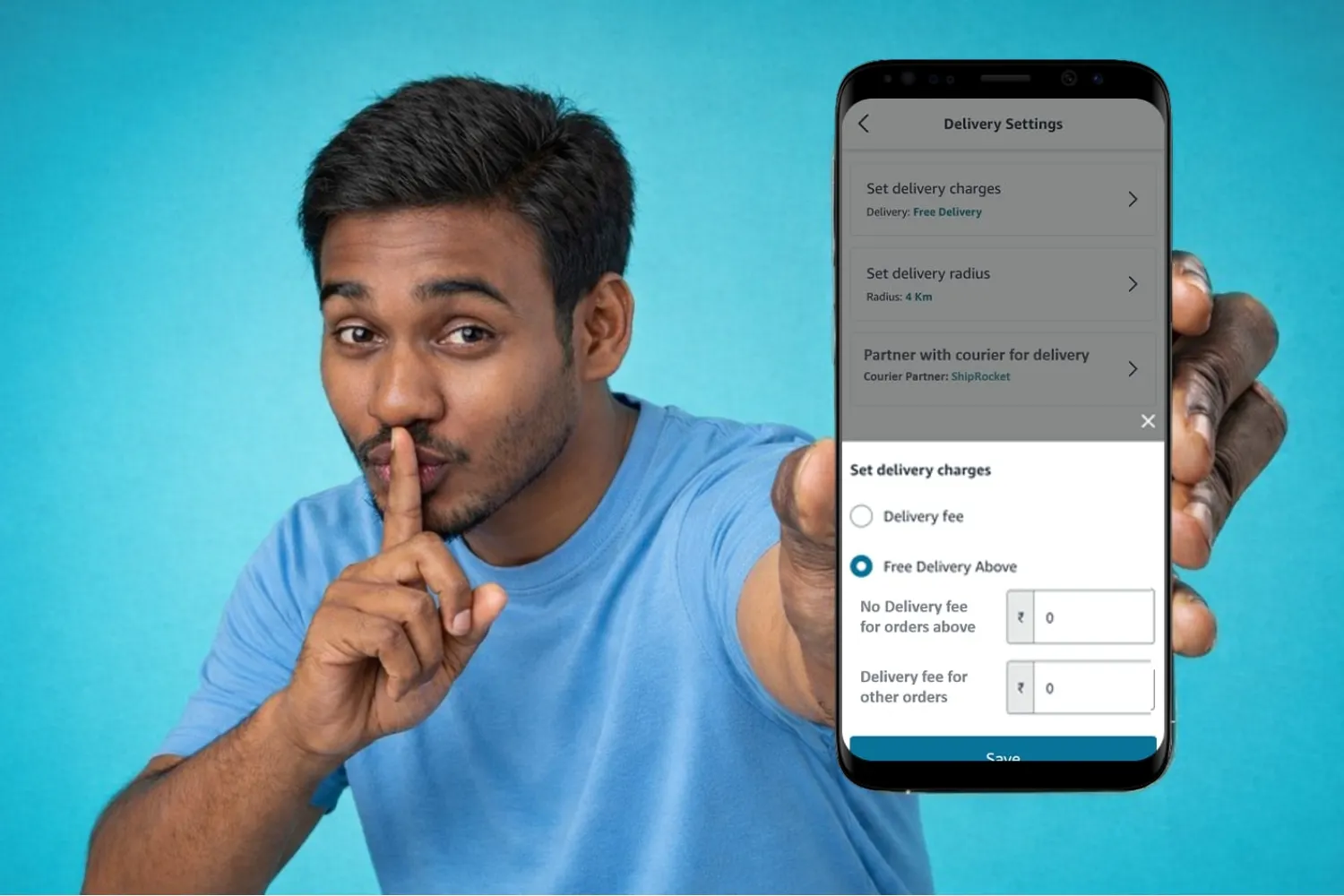
Let's be honest. You're not running a charity, and pretending delivery charges are always the wrong move would be bad advice.
Use the delivery charge strategy when:
- Your margins are extremely tight, and you genuinely can't absorb the cost
- You're testing a new product and haven't validated demand yet
- Competitors are aggressively undercutting, and you need clicks more than conversions right now
- You're in a category so commoditised that price is the only thing buyers look at
But here's a smart move for that last point: instead of just dropping your price and charging for delivery, try bundling.
Create a combo. Two units together. A product paired with a complementary item. A value pack. Price it slightly higher than the individual product, but offer free delivery on the bundle. Suddenly, the customer isn't comparing your price to the competitor’s; they’re looking at a better deal with no extra charges. The combo justifies the price, the free delivery seals it, and your margins are actually healthier than if you'd sold a single unit at a discount.
This works especially well in commoditised categories like groceries, personal care, and stationery, exactly where price wars are most brutal. Instead of racing to the bottom, you're creating a slightly different product that sits above the battlefield entirely.
Think of delivery charges as a short-term tactic, something you use in specific situations to survive a moment, not something you build your reputation on.
What the Smartest Sellers Are Quietly Doing
Here's the move experienced sellers figured out a long time ago:
- Build the delivery cost into the product price from the start
- Display the "FREE Delivery" badge prominently
- Price competitively not the cheapest, but fair enough to stay in the game
The result? The customer feels good about the experience. You protect your margins. Conversions go up. Repeat buyers increase. It's a compounding loop, not a one-time win.
The Bottom Line
Every sale comes down to one moment the second a customer looks at the total on their screen and decides whether to hit "Place Order" or close the tab.
Customer sees ₹499 with Free Delivery → Simple. Clean. Done.
Customer sees ₹399 + ₹80 delivery → "Why are sellers complicating this?"
Same or almost the same total value. Completely different emotional outcome.
Because in e-commerce, the seller who understands how customers feel is always going to beat the one who's only thinking about the visible number.
"Customers don't remember the cheapest price. They remember the smoothest experience."
Free Delivery isn't just a logistics decision it’s a brand statement that declares to your buyers: we've thought about your experience, and we're not going to surprise you at the last second.
Build that reputation. Protect your margins smartly. Win the experience, not just the price war.
That's how you build something that lasts on Amazon.
Have a pricing strategy that's working for your store? The best decisions always come from your own data — test, observe, and adapt.
How NextGen Will Help You
NextGen helps you make smarter e-commerce decisions that directly improve your sales, margins, and customer experience. We don't just help you sell online — we help you build a stronger and more sustainable business.
We support you in choosing the right pricing strategy, understanding customer buying behaviour, and creating listings that convert better. Whether it's deciding between free delivery and lower visible pricing, improving your product positioning, or strengthening your marketplace performance, NextGen helps you take decisions based on logic, market understanding, and growth potential.
With NextGen, you get:
- Better pricing guidance to improve conversion
- Smarter marketplace strategy to stay competitive
- Support in building a premium customer experience
- Help in protecting margins while increasing sales
- Practical guidance to grow your brand, not just chase short-term orders
In simple words: NextGen helps you sell smarter, earn better, and build long-term growth on e-commerce platforms.
Book a Free Consultation!
Start Selling With E-Commerce Experts!
Book a consultation with e-commerce experts today! Our team provides professional assistance with seller registration, product catalog optimization, and more.
Free consultation • Fast response
Let’s discuss your growth plan
Share your requirements and we’ll suggest the best next steps for your store, ads, and performance.
- Store & catalog review
- Ads & ROAS audit
- Setup & onboarding
- Actionable roadmap
Prefer email? [email protected]